Showing posts with label Best Dance Direction. Show all posts

Best Dance Direction, 1937

Awards presented March 10, 1938

The last year for this award, which is an indication that musicals were beginning to fade at the box office. They would revive again in the 1940s, particularly at MGM, so it's a bit of a shame that the category was eliminated. It's notable that although he was nominated in every year that the award was presented, the choreographer who had the greatest influence on the treatment of dance in the movies, Busby Berkeley, never won.

The nominees were ... 

And the Oscar went to ... 
Hermes Pan, "Fun House" number from A Damsel in Distress. 
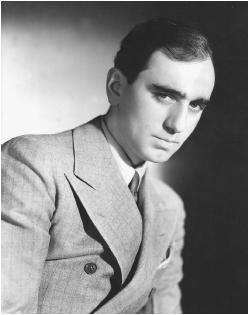
Hermes Pan
Pan came by his Greek mythological name honestly: He was born Hermes Panagiotopoulos. After working as a chorus boy on Broadway, he went to Hollywood, where he worked as an assistant to choreographer Dave Gould on the first movie to feature Fred Astaire and Ginger Rogers, Flying Down to Rio. Impressed with Pan's ideas for dance steps, Astaire formed a partnership that lasted through all of Astaire's films with Rogers at RKO. Together, Astaire and Pan would work out dance routines, and Pan would then teach them to Rogers. They also worked together on many of Astaire's films without Rogers. Pan also choreographed many other films, including Betty Grable's musicals at 20th Century-Fox. While Pan, who resembled Astaire, has been called Astaire's alter ego, it's evident from the films on which he was not assisted by Pan that Astaire had a style of his own. A Damsel in Distress is a product of Astaire's desire not to be identified as a member of a dance team, as he had been during his Broadway collaboration with his sister Adele, so when he signed a five-picture contract with RKO in 1936, he stipulated that one of the five be with someone other than Rogers. Unfortunately, considering that the film has a song score by George and Ira Gershwin, the leading lady who was cast in the film, Joan Fontaine, could neither sing nor dance. (It was Fontaine's first major film, and she looks terrified throughout -- a fact that helped her get cast as the timid second Mrs. DeWinter in Rebecca.) Astaire goes solo through much of the film except for the "Fun House" number, which features George Burns and Gracie Allen.   


Best Dance Direction, 1936

Awards presented March 4, 1937

The nominees were ... 

... when they should have been ... 
And the Oscar went to ... 
Seymour Felix, "A Pretty Girl Is Like a Melody" number from The Great Ziegfeld. 
Felix began his career as a dancer in vaudeville, then moved into choreography on Broadway. He was lured to Hollywood in 1929 at the dawn of movie musicals. Although there is some dancing in the spectacular number for which he won the Oscar, it's mostly a triumph of sets and costumes, as Dennis Morgan (billed under his real name, Stanley Morner, and dubbed by Allan Jones) ascends a great staircase, spiraling around a column, while singing Irving Berlin's song to a bevy of chorus girls. 

... when it should have gone to ... 
Hermes Pan, "Let's Face the Music and Dance" number from Follow the Fleet. 
Nothing against the "Bojangles of Harlem" number, or the other great number from Swing Time, "Never Gonna Dance," but "Let's Face the Music and Dance" seems to me the pinnacle of the collaboration of Astaire, Rogers, and Pan. It uses Irving Berlin's song as the basis of a dance narrative about the meeting of two down-on-their-luck gamblers, Astaire and Rogers, who find consolation in each other. Rogers wears a rather amazing gown with a weighted hem that swirls around her as she moves and whose fit and translucency shows off her extraordinary figure. The number ends with a breathtaking strut as the two exit. 


Best Dance Direction, 1935

Awards presented March 5, 1936

A choreography award made perfect sense when musicals were packing them in at the box office, but the Academy presented one for only three years. Hermes Pan came in second this year and Busby Berkeley was third.

The nominees were ... 


And the Oscar went to ... 
Dave Gould, "I've Got a Feeling You're Fooling" number from Broadway Melody of 1936; and "Straw Hat" number from Folies Bergere. 

... when it should have gone to ... 
Busby Berkeley, "Lullaby of Broadway" and "The Words Are In My Heart" numbers from Gold Diggers of 1935. 
Busby Berkeley
His name is almost synonymous with the musicals of the 1930s, with their chorus girls forming kaleidoscopic patterns and the production numbers that turn into minidramas. His work as a leading choreographer of Broadway musicals brought him inevitably to Hollywood with the advent of sound, when comedian Eddie Cantor asked him to choreograph the film version of his musical Whoopee! Berkeley was quick to see that film allowed for more than just the head-on shooting of a musical number as if you were watching it on stage, as in the Oscar-winning Broadway Melody, for example. Though he was not the inventor of the overhead shot, he made it his trademark along with close-ups of chorus girls' faces. He ignored the constraints of time and space: Even when a number was supposedly taking place in a theater, he introduced scene changes and intimate close-ups that would have been impossible in the real world. In 1933 he began his relationship with Warner Bros.,where he moved into directing as well as choreographing films, including Gold Diggers of 1935 and such non-musicals as John Garfield's They Made Me a Criminal. In 1939 he moved from Warners to MGM, where he directed and choreographed the Judy Garland-Mickey Rooney "hey kids, let's put on a show" musicals Babes in Arms, Strike Up the Band, and Babes on Broadway, as well as Gene Kelly's debut film, For Me and My Gal. He also did some work at 20th Century-Fox, most notably on the extravagant Carmen Miranda number "The Lady in the Tutti-Frutti Hat" for The Gang's All Here, which featured chorus girls doing things with giant bananas that make one feel sure the censors had never read Freud. Back at MGM he was also responsible for many of the aquatic numbers in movies starring Esther Williams. He came out of retirement in 1971 to supervise the Broadway revival of Vincent Youmans's No, No, Nanette, which featured his old Warners star Ruby Keeler, though there is some dispute about how much of a contribution the 75-year-old Berkeley actually made to the show. 


Possibly the greatest of all of Berkeley's Warners numbers, with its expressionistic sets (Anton Grot), lighting and camera angles (George Barnes). The climax, with the madly tapping chorus line spooking the Broadway baby (Wini Shaw) into her fatal fall, has been seen by some as a Berkeleyan commentary on the rise of fascism, particularly the entrance of the men, who seem to be giving a one-armed fascist salute. 

Not quite as great, but who other than Berkeley would fill a sound stage with dancing pianos?