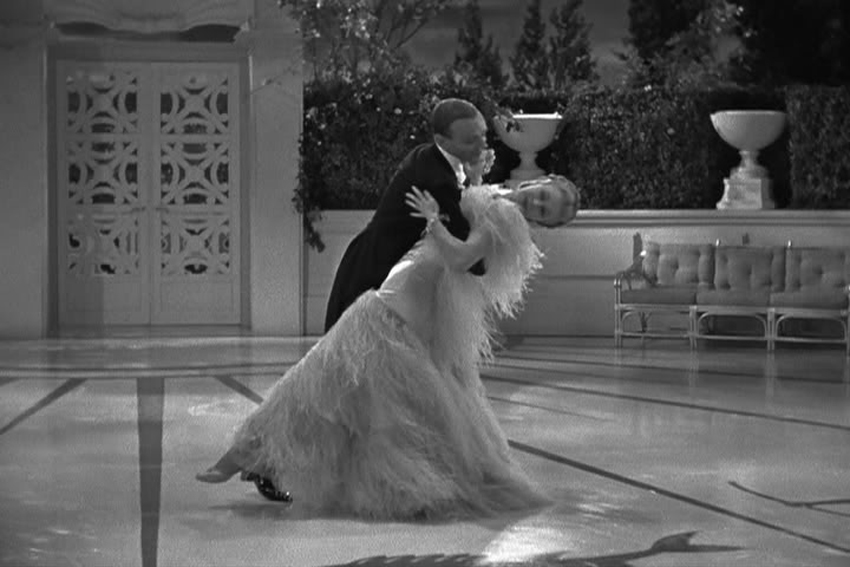
The nominees were ...
(Black-and-White)
- George Washington Slept Here. Art Direction: Max Parker, Mark-Lee Kirk; Interior Decoration: Casey Roberts
- The Magnificent Ambersons. Art Direction: Albert S. D'Agostino; Interior Decoration: Darrell Silvera, Al Fields
- The Pride of the Yankees. Art Direction: Perry Ferguson; Interior Decoration: Howard Bristol
- Random Harvest. Art Direction: Cedric Gibbons, Randall Duell; Interior Decoration: Edwin B. Willis, Jack Moore
- The Shanghai Gesture. Art Direction: Boris Leven; Interior Decoration: Boris Leven
- Silver Queen. Art Direction: Ralph Berger; Interior Decoration: Emile Kuri
- The Spoilers. Art Direction: Jack Otterson, John B. Goodman; Interior Decoration: Russell A. Gausman, Edward R. Robinson
- Take a Letter, Darling. Art Direction: Hans Dreier, Roland Anderson; Interior Decoration: Sam Comer
- The Talk of the Town. Art Direction: Lionel Banks, Rudolph Sternad; Interior Decoration: Fay Babcock
- This Above All. Art Direction: Richard Day, Joseph Wright; Interior Decoration: Thomas Little
(Color)
- Arabian Nights. Art Direction: Jack Otterson Alexander Golitzen; Interior Decoration: Russell A. Gausman, Ira S. Webb
- Captains of the Clouds. Art Direction: Ted Smith; Interior Decoration: Casey Roberts
- Jungle Book. Art Direction: Vincent Korda; Interior Decoration: Julia Heron
- My Gal Sal. Art Direction: Richard Day, Joseph Wright; Interior Decoration: Thomas Little
- Reap the Wild Wind. Art Direction: Hans Dreier, Roland Anderson; Interior Decoration: George Sawley
And the Oscar went to ...
(Black-and-White)
(Color)
Winning Oscars in the same year for both color and black-and-white films is something of a tour de force for the 20th Century-Fox design team. And the films were very different: This Above All is a romance set in wartime London with AWOL soldier Tyrone Power being converted to patriotism by WAAF Joan Fontaine. My Gal Sal is one of Fox's countless turn-of-the-century musicals, in which songwriter Paul Dresser (Victor Mature) falls in love with singer Sally Elliott (Rita Hayworth). Naturally, he writes a song about her. In real life, Sal was a prostitute Dresser had known in his youth, but no one expects fidelity to the truth in a Fox musical biopic, even when it purports to be based on the memoirs of Dresser's brother, the novelist Theodore Dreiser. Hayworth, whose singing voice is dubbed by Nan Wynn, replaced a pregnant Alice Faye in the role. These were numbers four and five in Day's seven Oscars, and the second and third of Little's six. They were the only wins for Wright, who was nominated ten more times.
_05.jpg) |
| Lobby card for My Gal Sal |
... when it should have gone to ...
(Black-and-White)
The Magnificent Ambersons. Art Direction: Albert S. D'Agostino; Interior Decoration: Darrell Silvera, Al Fields.
The fin de siècle sets for the Amberson mansion are among the most convincing period re-creations in an era when Hollywood had few scruples about verisimilitude. Orson Welles said that Anne Baxter's grandfather, Frank Lloyd Wright, visited the set and was appalled by their gloomy clutter -- precisely what his own domestic architecture had aimed at ending. Welles had been disappointed by the snow scenes in Citizen Kane because you couldn't see the actors' breath, so he had the snow scenes in Ambersons staged in a Los Angeles icehouse, which had been used for Lost Horizon and would be used again by D'Agostino for The Thing From Another World in 1951. The Amberson mansion exterior would be reused too, in It's a Wonderful Life. D'Agostino, who took over as head of the RKO art department when Van Nest Polglase moved to Columbia, was nominated five times, but never won. Silvera had seven nominations and no wins, but Fields won for his work on Blood on the Sun.
 |
| Sets in Welles's films usually had ceilings, providing a sense of confinement in this low-angle, deep-focus shot of Tim Holt in The Magnificent Ambersons. |
 |
| Holt ascends a staircase in the Amberson mansion |
 |
| Holt and Anne Baxter in the skating scene, filmed in a Los Angeles icehouse |
 |
| Dolores Costello and Holt in the Ambersons' dining room |