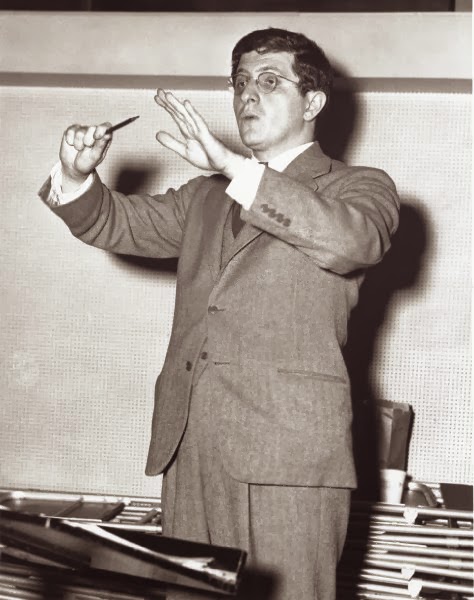
The nominees were ...
(Music Score of a Dramatic or Comedy Picture)
- Daniele Amfitheatrof, Guest Wife
- Louis Applebaum, Ann Ronell, G.I. Joe
- Robert Emmett Dolan, The Bells of St. Mary's
- Lou Forbes, Brewster's Millions
- Karl Hajos, The Man Who Walked Alone
- Werner Janssen, Captain Kidd
- Werner Janssen, Guest in the House
- Werner Janssen, The Southerner
- Edward J. Kay, G.I. Honeymoon
- Arthur Lange, Hugo Friedhofer, The Woman in the Window
- Alfred Newman, The Keys of the Kingdom
- Miklos Rozsa, The Lost Weekend
- Miklos Rozsa, Spellbound
- Miklos Rozsa, Morris Stoloff, A Song to Remember
- H.J. Salter, This Love of Ours
- Morton Scott, Dale Butts, Flame of Barbary Coast
- Herbert Stothart, The Valley of Decision
- Alexander Tansman, Paris--Underground
- Franz Waxman, Objective, Burma!
- Roy Webb, The Enchanted Cottage
- Victor Young, Love Letters
(Scoring of a Musical Picture)
- Robert Emmett Dolan, Incendiary Blonde
- Walter Greene, Why Girls Leave Home
- Ray Heindorf, Lou Forbes, Wonder Man
- Ray Heindorf, Max Steiner, Rhapsody in Blue
- Edward J. Kay, Sunbonnet Sue
- Jerome Kern, H.J. Salter, Can't Help Singing
- Arthur Lange, Belle of the Yukon
- Alfred Newman, Charles Henderson, State Fair
- Morton Scott, Hitchhike to Happiness
- Marlin Skiles, Morris Stoloff, Tonight and Every Night
- Georgie Stoll, Anchors Aweigh
- Charles Wolcott, Edward Plumb, Paul J. Smith, The Three Caballeros
(Song)
- "Accentuate the Positive," from Here Come the Waves. Music by Harold Arlen; Lyrics by Johnny Mercer
- "Anywhere," from Tonight and Every Night. Music by Jule Styne; Lyrics by Sammy Cahn
- "Aren't You Glad You're You?" from The Bells of St. Mary's. Music by James Van Heusen; Lyrics by Johnny Burke
- "The Cat and the Canary," from Why Girls Leave Home. Music by Jay Livingston; Lyrics by Ray Evans
- "Endlessly," from Earl Carroll Vanities. Music by Walter Kent; Lyrics by Kim Gannon
- "I Fall in Love Too Easily," from Anchors Aweigh. Music by Jule Styne; Lyrics by Sammy Cahn
- "I'll Buy That Dream," from Sing Your Way Home. Music by Allie Wrubel; Lyrics by Herb Magidson
- "It Might As Well Be Spring," from State Fair. Music by Richard Rodgers; Lyrics by Oscar Hammerstein II
- "Linda," from G.I. Joe. Music and Lyrics by Ann Ronell
- "Love Letters," from Love Letters. Music by Victor Young; Lyrics by Eddie Heyman
- "More and More," from Can't Help Singing. Music by Jerome Kern; Lyrics by E.Y. Harburg
- "Sleighride in July," from Belle of the Yukon. Music by James Van Heusen; Lyrics by Johnny Burke
- "So in Love," from Wonder Man. Music by David Rose; Lyrics by Leo Robin
- "Some Sunday Morning," from San Antonio. Music by Ray Heindorf and M.K. Jerome; Lyrics by Ted Koehler
(Music Score of a Dramatic or Comedy Picture)
 |
| Miklos Rozsa with Oscar presenter Ginger Rogers |
(Scoring of a Musical Picture)
Georgie Stoll, Anchors Aweigh.
Gene Kelly and Frank Sinatra play sailors who fall for the same woman, Kathryn Grayson, with predictable consequences for their friendship. Grayson's nephew is played by nine-year-old Dean Stockwell. The songs by Jule Styne and Sammy Cahn are pleasant, and Kelly and Sinatra make an enormously appealing team. The choreography is by Kelly, and Sinatra proves to be a surprisingly good dancer. The movie, directed by George Sidney, was Kelly's first big hit for MGM. After his 1942 debut in For Me and My Gal, the studio seemed to be unable to find anything for him to do, so it loaned him out to Columbia for Cover Girl, in which he displayed his ingratiating athletic style of dancing for the first time on screen. Anchors Aweigh is lightweight stuff compared to later Kelly films such as An American in Paris and Singin' in the Rain, and it features MGM's usual tedious appearance by pianist Jose Iturbi, but its highlight is the wonderful sequence that was suggested by Stanley Donen, in which Kelly dances with Jerry, the mouse from MGM's Tom and Jerry cartoons. This was the only Oscar for Stoll, who had been a music director and conductor for MGM
since 1937.
(Song)
Gene Kelly and Frank Sinatra play sailors who fall for the same woman, Kathryn Grayson, with predictable consequences for their friendship. Grayson's nephew is played by nine-year-old Dean Stockwell. The songs by Jule Styne and Sammy Cahn are pleasant, and Kelly and Sinatra make an enormously appealing team. The choreography is by Kelly, and Sinatra proves to be a surprisingly good dancer. The movie, directed by George Sidney, was Kelly's first big hit for MGM. After his 1942 debut in For Me and My Gal, the studio seemed to be unable to find anything for him to do, so it loaned him out to Columbia for Cover Girl, in which he displayed his ingratiating athletic style of dancing for the first time on screen. Anchors Aweigh is lightweight stuff compared to later Kelly films such as An American in Paris and Singin' in the Rain, and it features MGM's usual tedious appearance by pianist Jose Iturbi, but its highlight is the wonderful sequence that was suggested by Stanley Donen, in which Kelly dances with Jerry, the mouse from MGM's Tom and Jerry cartoons. This was the only Oscar for Stoll, who had been a music director and conductor for MGM
since 1937.
(Song)
"It Might As Well Be Spring," from State Fair. Music by Richard Rodgers; Lyrics by Oscar Hammerstein II.
A musical remake of the 1933 film version of the novel by Phil Stong, directed by Walter Lang from a screenplay by Hammerstein, starring Jeanne Crain, Dana Andrews, Dick Haymes, and Vivian Blaine. This is the only original film musical written by Rodgers and Hammerstein, though each had collaborated with other lyricists or composers on other films. In addition to the Oscar-winning song, the score also included "It's a Grand Night for Singing" and "That's for Me." Crain's voice was dubbed by Louanne Hogan, and although Andrews had a trained voice and once thought of becoming an opera singer, he is dubbed in his only brief vocal moment by Ben Gage. This was Rodgers's only Oscar nomination and win; Hammerstein had already won for "The Last Time I Saw Paris" from Lady Be Good and received three more nominations.
A musical remake of the 1933 film version of the novel by Phil Stong, directed by Walter Lang from a screenplay by Hammerstein, starring Jeanne Crain, Dana Andrews, Dick Haymes, and Vivian Blaine. This is the only original film musical written by Rodgers and Hammerstein, though each had collaborated with other lyricists or composers on other films. In addition to the Oscar-winning song, the score also included "It's a Grand Night for Singing" and "That's for Me." Crain's voice was dubbed by Louanne Hogan, and although Andrews had a trained voice and once thought of becoming an opera singer, he is dubbed in his only brief vocal moment by Ben Gage. This was Rodgers's only Oscar nomination and win; Hammerstein had already won for "The Last Time I Saw Paris" from Lady Be Good and received three more nominations.
... when it should have gone to ...
(Song)
"Accentuate the Positive," from Here Come the Waves. Music by Harold Arlen; Lyrics by Johnny Mercer.
Betty Hutton plays twins -- one smart, one silly -- who have a nightclub act but decide to do their part during the war by joining the Waves. The smart twin falls in love with Bing Crosby, and the silly twin tries to break them up by pretending to be her sister. Goofy nonsense, directed by Mark Sandrich, that is now remembered almost solely for Arlen and Mercer's classic, introduced by Crosby and Sonny Tufts in a blackface number. The minstrelsy is kind of unforgivable, but if you can tolerate it, just listen to Crosby demonstrate why he was one of the greatest jazz singers of all time. The accompanying dance number, choreographed by Danny Dare, is pretty good too.
Betty Hutton plays twins -- one smart, one silly -- who have a nightclub act but decide to do their part during the war by joining the Waves. The smart twin falls in love with Bing Crosby, and the silly twin tries to break them up by pretending to be her sister. Goofy nonsense, directed by Mark Sandrich, that is now remembered almost solely for Arlen and Mercer's classic, introduced by Crosby and Sonny Tufts in a blackface number. The minstrelsy is kind of unforgivable, but if you can tolerate it, just listen to Crosby demonstrate why he was one of the greatest jazz singers of all time. The accompanying dance number, choreographed by Danny Dare, is pretty good too.